
A clinical consultation in Andorra that doesn’t stop at the symptoms. We investigate what’s out of balance in your nervous, immune, endocrine and digestive systems, and design an integrated plan —nutrition, habits, supplementation and manual techniques— so your body can work the way it should again.
First time? Call us at +376 867 700 and we’ll guide you with no commitment.
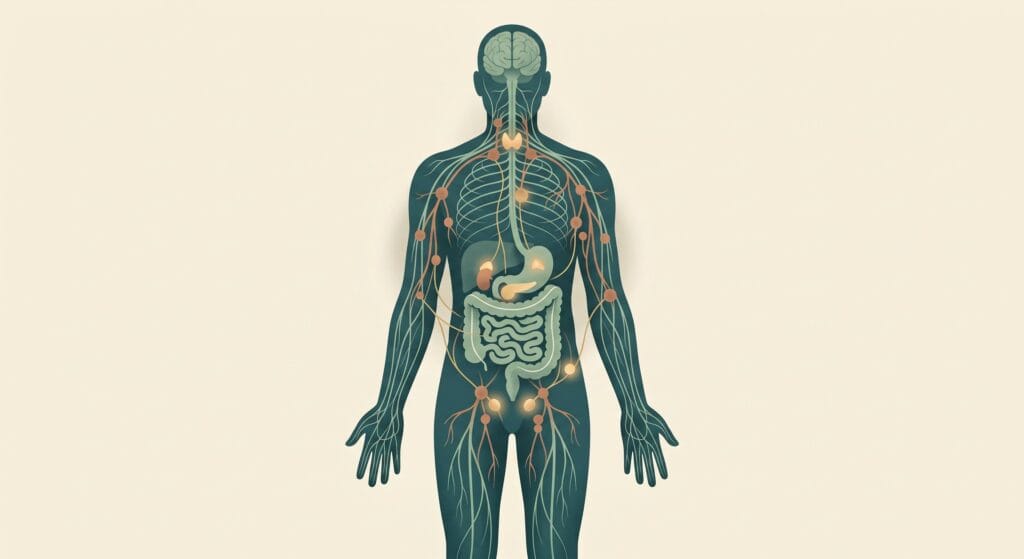
Clinical psychoneuroimmunology —PNI— is a medical discipline that studies how four systems —usually treated separately by conventional medicine— communicate with each other: the nervous, immune, endocrine and digestive systems.
These four systems don’t work in sealed compartments. Chronic inflammation that begins in the gut affects the brain. Sustained stress alters thyroid function. Silent insulin resistance reshapes the immune system. And all of this happens before the symptoms that bring someone to the doctor even appear.
Clinical PNI integrates findings from the microbiome, nutrition, endocrinology, neuroscience and immunology to ask a different question:
what is out of balance in this body, why, and what does it need to start regulating itself again?
It’s a fundamental shift in approach. Conventional medicine —essential, and never replaced by PNI— focuses on diagnosing illnesses once they are established and on treating symptoms. PNI works upstream and underneath the symptoms, on the mechanisms that produce them.
A PNI consultation is especially useful when your situation matches one of the following.
Persistent fatigue, diffuse pain, digestive or skin problems that conventional tests describe as «normal».
Hashimoto's, lupus, rheumatoid arthritis, psoriasis, multiple sclerosis, ulcerative colitis, Crohn's disease and other conditions where the immune system attacks the body itself.
Irritable bowel syndrome, bacterial overgrowth (SIBO), dysbiosis, chronic bloating, multiple intolerances.
Impaired fasting glucose, prediabetes, type 2 diabetes, metabolic syndrome, non-alcoholic fatty liver.
Polycystic ovary syndrome, endometriosis, irregular cycles, functional infertility, subclinical hypothyroidism, perimenopause and menopause with poorly managed symptoms.
Deep fatigue that doesn't improve with rest, widespread pain, brain fog, intolerance to effort.
Elevated inflammatory markers, non-traumatic joint pain, inflammatory skin conditions (adult acne, dermatitis, rosacea).
When psychotherapy helps but the body is still on alert. PNI addresses the physiological component of chronic stress.
Recurrent cystitis, chronic candidiasis, recurrent herpes, reactivated Epstein-Barr virus, frequent throat infections.
Professionals with high mental demand, athletes, people focused on active prevention, recovery after oncology treatment.
Not sure? If you have doubts about whether a PNI consultation fits your case, call us at +376 867 700. A five-minute phone call is enough for us to guide you with no commitment.
A PNI consultation is more than a blood test and a prescription. Before suggesting any treatment, we systematically assess the eight functional axes that have the greatest impact on health.
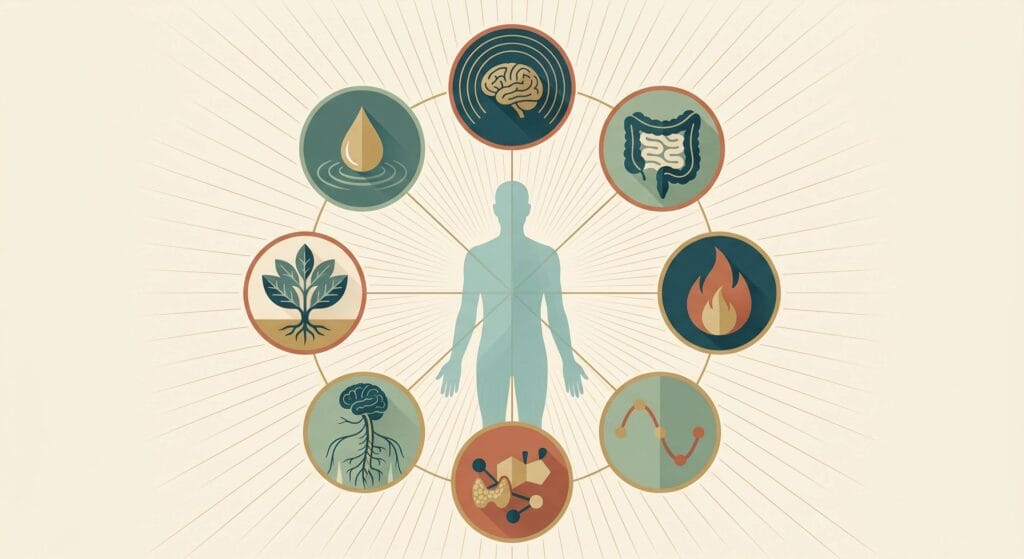
State of the intestinal barrier, balance of gut bacteria, fermentation, presence of overgrowths, quality of digestion.
Systemic inflammatory markers, silent inflammatory foci, factors that keep inflammation going.
How well cells respond to insulin, fasting glucose, glycated haemoglobin, functional lipid profile.
Functional thyroid (not just TSH), sex hormones, adrenal axis, circadian rhythms of cortisol.
Balance between sympathetic and parasympathetic, recovery capacity after stress, quality of deep sleep.
Functional deficiencies (vitamin D, B12, functional iron, magnesium, omega-3), real eating patterns, quality of the food matrix.
Endocrine disruptors, air and water quality, personal care products, occupational exposure, environmental electromagnetism.
Levels of sustained stress, sense of purpose, relationships, quality of mental rest, psychosocial factors that shape physiology.
We send you a detailed questionnaire to gather your history: current symptoms, how they have evolved over time, medical background, previous treatments, eating habits, sleep, stress and life context. If you have recent blood tests or previous workups, we ask you to bring them or send them in advance.
We go through your complete clinical history together. We explore the functional axes that matter for your case. When relevant, we carry out a focused physical examination or use complementary assessment tools. By the end of the appointment you leave with an initial plan: dietary changes, supplementation recommendations where needed, habit adjustments and, in some cases, referrals for specific blood work.
PNI is not a one-off consultation. Chronic processes take years to settle in and need months of consistent work to be reversed. The usual pattern is three or four follow-up appointments during the first three to six months, spaced according to your case. At each visit we review your tests, adjust the plan and build on what is already working.
Once symptoms ease and markers stabilise, we move to a more spaced-out follow-up (every 3-6 months) or discharge you with a maintenance plan.
Realistic timelines: many people notice significant improvements in the first 4-8 weeks (energy, digestion, sleep). Reversing deeper processes —autoimmunity, advanced insulin resistance, long-standing chronic fatigue— takes between 6 and 18 months of sustained work. PNI is not a quick fix; it's a deep change.
Beyond the clinical interview and conventional blood work, we use the following tools in our practice depending on what each case needs.
Gut microbiome analysis, organic acids profile, methylation metabolism, hormones in saliva or dried urine, low-grade inflammation panels, mineralogram, intolerances and intestinal permeability. We order them when they provide information that changes the therapeutic plan.
Methods from Dr. Tung, Dr. Tan (energy balance), YNSA, Dr. John Boel and EAM by Dr. Jeremy Steiner. Useful to regulate the autonomic nervous system, reduce chronic pain and modulate inflammation.
Fine modulation of the immune system in autoimmune disease, chronic infections and persistent viral processes.
Systemic anti-inflammatory action and tissue oxygenation in selected chronic inflammatory processes.
When clinically relevant, we can complement the assessment with a bioresonance scan. It is always a complement, never a replacement for clinical judgement or conventional tests.
Non-invasive physiological assessment in the office: mineral, vitamin, oxidative stress and heavy metal status (OLIGO/CHECK), heart rate variability and stress (CARDI/CHECK), and gut microbiota (G-NIOM/CHECK). We use it as an objective complement to clinical follow-up. Learn more.

At Centre Mèdic Dr. Aldosa, PNI is not a standalone consultation. It is the discipline that connects and gives clinical coherence to the rest of the centre's services. When a case calls for it, the PNI consultation is combined with other tools we offer under the same roof:
This combination is what sets a real clinical PNI approach apart from a nutrition consultation or a stand-alone treatment: one team, one plan, several tools all working in the same direction.
Master's in Psychoneuroimmunoendocrinology at Regenera Barcelona, one of the European reference centres for clinical PNI training.
Real cases, not just theory. We work alongside Dr. Aldosa Mora, the centre's medical director, which gives us clinical continuity and medical backing whenever a case requires it.
Methods from Dr. Tung, Dr. Tan, YNSA, Dr. Boel and EAM. An uncommon training that adds a very valuable extra clinical tool.
No dietary labels. Recommendations are built on the most solid evidence available for your specific case.
We share educational content on the Salud de Raíz YouTube channel so you can understand what is happening in your body, and why.
They aren’t opposing approaches, they are complementary. Conventional medicine is essential to diagnose and treat acute illness, emergencies and conditions that need pharmacological or surgical intervention. PNI works upstream and underneath the symptoms, on the mechanisms that produce chronic dysfunction: low-grade inflammation, microbiome alterations, insulin resistance, an overloaded stress system. The aim of PNI isn’t to replace your doctor —it’s to complement their work by tackling what their consultation, due to time and specialisation, cannot fully cover.
Yes, in the vast majority of cases. PNI recommendations are designed with your current medication in mind and are coordinated with your doctor whenever necessary. We will never ask you to stop a prescribed treatment. What can happen, as your body regulates itself, is that your doctor decides to taper the medication. That decision always belongs to whoever prescribed it, not to us.
It depends on the case. Many patients notice significant changes in the first 4-8 weeks: more energy, easier digestion, more restorative sleep, better mood. Reversing more entrenched processes —autoimmune disease, long-standing chronic fatigue, advanced insulin resistance— takes between 6 and 18 months of sustained work. PNI is not a quick fix. It’s a deep change.
No. PNI complements conventional medical care, it doesn’t replace it. Keeping up your follow-up with your GP and any specialists involved in your care is important. What we add is an extra layer of analysis and treatment focused on the underlying mechanisms that conventional consultations, given their format and time, rarely manage to cover.
Any blood tests and medical reports you have from the last two years (blood, urine, ultrasounds, MRIs, endoscopies —whatever is relevant). A list of the medication and supplements you’re currently taking. The initial questionnaire we send you, completed. And, most importantly, an hour and a half without rushing to talk about your case with the depth it deserves.
Yes, we offer online consultations for patients who can’t travel to Andorra. The first appointment is preferably in person whenever possible, as it allows for a more complete evaluation, but we can hold it online if circumstances require it. Follow-ups generally work very well in an online format.
No. It is a private consultation and is not covered by CASS.
Yes. Clinical PNI is built on solid bodies of literature on the gut-brain axis, the microbiome, low-grade chronic inflammation, neuroendocrine regulation of the immune system, insulin resistance and clinical nutrition. These research areas are published in high-impact journals and are increasingly accepted by academic medicine. What sets clinical PNI apart is the integration of this knowledge into a therapeutic approach that can be applied to the individual patient —something the usual fragmentation of hospital medicine struggles to allow.
Medical emergencies, conditions that require immediate hospital treatment, severe decompensated psychiatric situations and, in general, any case that needs priority conventional medical intervention. PNI is a consultation for chronic processes and for health optimisation. If you have doubts about whether your case fits, please call us before booking.
Share the reason for your consultation with us by phone or through the contact form and we’ll confirm the up-to-date price, the expected duration and how follow-up is structured for your specific case.
If you’ve made it this far, your case is likely a good fit for a PNI approach. The first appointment is designed so you leave with clarity: what’s happening in your body, why, and what needs to be done to turn it around.
Centre Mèdic Dr. Aldosa
Av. Carlemany 75, 2n 1a · AD700 Escaldes-Engordany · Andorra
Phone: +376 867 700 · Email: centremedicaldosa@gmail.com
Hours: Monday to Friday, 9:00 - 13:30